Saturday, 19 December 2009

Model Behaviour


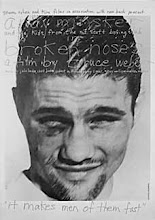
Released in 1991, 'Behaviour', the fourth studio album by the Pet Shop Boys somehow became an instant elegy for a generation. The collection of songs were deemed by Entertainment Weekly to be 'heartfelt expressions of romantic distress, plus their best tunes yet'. Elsewhere, epithets such as 'sublime', 'unforgettable' and 'magnificent' were bandied about the popular music press of the time. In his blog 'A Film Canon', Billy Stevenson echoes the sentiments of all for whom the album remains firmly lodged within the heart and mind as ' pop music's answer to Proust's madeleine', and so it proves (and continues so to do) with the passing of the years, despite what has continued to be the PSBs burgeoning pop canon. The video for 'Being Boring'. the album's opening salvo (and arguably, it's most unforgettable song) was shot by Bruce Weber and, watching again with the sober benefit of experience, it appears somehow akin to a Golden Age before the Deluge, with it's seductive images of sublimely beautiful young people at play in a perfect world; somehow, as though the Jeunesse D'ore of Alain-Fournier's 'Le Grand Meaulnes' have been beamed to the suns of California, and suffused with the perceived perfection of an Abercrombie and Fitch universe. Stevenson continues that 'Behaviour' 'deals more with mnemosexuality than homosexuality; that is, sexuality as a search for sexuality, a journey limited by its own vocabulary, and so only accessible in terms of more general, ostensibly asexual, expressions of yearning. It feels as though the Boys only invoke betrayal- and more generally, the confessional mode- as a pretext for wider reflections on the passage of betrayal and time', and so it proves for me, all these years later, a bringing to mind (as it specifically did with Tennant) all of those who have been swept away by the ravages of time and circumstance- yet remain in memory as sharply as do these songs. As 'Court and Spark', Joni Mitchell's sublime, LA-infused album of 1974 similarly attests, there are collections of songs which simply fuse us irrevocably to our time, and can never set us free. 'Behaviour', therefore, is the touchstone for a generation of gay men, in particular- which fixes us to period when our world was less grave, but which still somehow allows us that breath of memory, the joys of love and friendship- and a recollection of a time before the Fall.

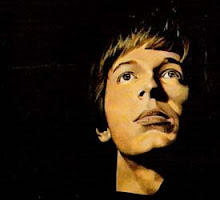
When Tennant was interviewed for the South Bank Show in 1991, he spoke eloquently about 'Being Boring'. 'A lot of our songs come about through personal experience. 'Being Boring, which I think is one of our best songs,..I was reminded of a party we had when I was living in Newcastle as a teenager' - and where the invitation purportedly contained a quote from Zelda Fitzgerald; 'She was never bored, mainly because she was never boring'.

Tennant went on to say that 'a very good friend of mine from that era had died of AIDS, so [the song] was a kind of an elegy for him, for the part of myself in Newcastle, all my friends in Newcastle, when I went to London, what I was doing then, but he wasn't there. And so it became a really elegiac song'. He also states that 'Being Boring' was 'also an attempt to do a Stock, Aitken and Waterman thing, believe it or not'. At it's essence, 'Being Boring' describes three distinct forms of remembrance; personal, familial and communal and, to quote Billy Stevenson once again 'conflates them in such a way as to characterize Neil Tennant's subjectivity as a mere function of his inescapable memory, and love as a mere memory in the making'. Elsewhere on the album, is the sweeping, magnificent 'This must be the Place I Waited Years to Leave', a song-testimony to the rigors of a Catholic school upbringing, and which, if memory serves, during the concert performances of their second tour, saw Chris Lowe in short trousers and a school cap. It could equally be the clarion for all of us who endured the bullying and privations of a Secondary education. 'My October Symphony' continued Tennant's fascination with Russian history, but also succeeded (as do so many other PSB songs- witness 'Go West' on 1993's 'Very', in referencing a sub-text way beyond the Village People original, a love-lament for all of those who leave their home to seek a fabled 'promised land' elsewhere). Stevenson speaks of 'Jealousy', the album's ultimate track, as set in a London apartment 'in which the past is almost architectural, so concrete is its presence'.

For me, 'Behaviour' is forever the windswept majesty of Dungeness, and the animated trips into Rye with Derek Jarman, It is also the rooms of Streatham Hill, and of my dear friend David Kirkup, and my seventh-floor flat on the Old Kent Road. Listening again from the vantage-point of some twenty years, I am immediately transported back to these places and these people, and am more than glad to linger there for the duration; 'Behaviour' then, as a threnody for all that has gone before -and just maybe- for a domain now lost to us forever. A small photograph on the rear page of the CD boooklet shows the empty Arts and Crafts chair that Lowe has occupied on its front cover, the roses they cradle now strewn on the floor. If ever there was a metaphor for loss, the remembrance of time past (to plunder the Proustian epithet once more) this is it. One thing is for certain; it is with 'Behaviour' that the fabled chance-meeting of Tennant and Lowe in a King's Road hi-fi store truly reaches its apotheosis, and we, for all our gratitude, will never be the same again.

Monday, 26 October 2009

Heaven and Earth; A Eulogy for William Dyce's 'Pegwell Bay'


Pegwell Bay, situated on the estuary of the River Stour between Ramsgate and Sandwich, is the setting for one of the most evocative images of the Pre-Raphaelite era. Subtitled 'A Recollection of October 5th 1858', William Dyce's painting was the result of a trip made in the autumn of that year, and depicts members of his family searching for shells and fossils on the beach of the then-popular holiday resort. The meticulous rendering of the cliff-face reflected Dyce's keen interest in geology, as did his careful treatment of the flint-encrusted strata of the beach below them. The barely-visible tail of Donati's comet in the sky above places the activities of the human figures below within the broader scheme of time and space, and its inclusion as a fundamental facet of Dyce's composition, mirrored his fascination with astronomy and with the workings of the heavens. The plein air feel to the painting is due the fact that, following Ruskin's precepts, Dyce made his initial studies in-situ, and the entire mood of the image is charged with questions about man and his place in nature. The location is also significant, as it was believed to be the first site of early Christian activity in the British Isles and was also a famous location for fossil hunters, particularly during the Victorian era, when the fascination for all things paleontological reached its zenith.

So expertly rendered, the chalk-cliffs of Dyce's painting are still clearly discernible to the contemporary onlooker. The car-park that overlooks the painting's viewpoint now lays in the vast shadow of 'Hugin', a viking longboat which was a gift from the people of Denmark to the population of the region in 1949 and which underwent extensive restoration in 2004. Hoverlloyd's 1960's cross-chanel port was located here, the vestiges of which have been almost entirely reclaimed by nature, particularly the concrete launch ramp that now trails off amid swathes of sedge and salt-flats now home to wading birds and willow warblers. Dominating the skyline is the mad, jugenstijl tower of the Belle Vue hotel which dwarfs the Victorian flint-built cottages that surround it, whilst in the sky, a continuous stream of freight aircraft fly low over the beach into Manston airport, forever replacing the mysterious comet which, like Breugel's 'Icarus', goes unnoticed by Dyce's crinolined subjects as they search the beach for their geological treasures.

Saturday, 17 October 2009

Quiet Witnesses


These simple chairs line the walls of the small North chapel of St. Clement, Old Romney in Kent. One of the most-visited of all the Marsh churches, it was built on an artificial mound to protect it from floodwaters. Old Romney churches have a sensibility that is unique, and in common say, with Fairfield and St. Mary-in-the-Marsh, St. Clement leaves a lasting impression on the visitor. Norman in origin, the nave was enlarged in the 13th century, when the aisles were added. Aside from this, it remains virtually unrestored, with an uneven floor, and a gallery which is reached by means of the narrow, somewhat vertiginous wooden staircase. Elsewhere, the rood-loft staircase, discovered in the 1920s retains its medieval door-frame. In the North chapel where these chairs reside is the mensa of the original medieval altar, with rails that date from the 18th century. The striking box pews also date from the late 18th century and retain the strawberry ice-cream pink that they were painted by the Rank film company for their film of 'Dr. Syn', based on Russell Thorndyke's novel 'A Tale of the Romney Marsh', written in 1915 and based on the exploits of the infamous 18th century smuggler in the region. The Royal Coat of Arms of George III also date back to the 18th century, which includes a lion with a benign yet smug expression. The capitals of the font are embellished with different figures and date back to the 14th century. Despite much depreciation, it is still possible to discern the characteristics of the individual grotesque creatures that they represent. Derek Jarman is buried in the churchyard, and his simple grave, marked by a solid piece of slate bearing his distinctive signature, often has flowers, messages and small votives that have been left by admirers as he lays in the shadow of the great yew near the church's perimeter fence.

Cowboy Small still rides the Range


Originally published in 1949, Lois Lenski's 'Cowboy Small' remains a delightful tale beloved of children worldwide. With his horse Cactus, the diminutive Wild West character greets his readers under the Bar S Ranch sign. Cowboy takes good care of Cactus, who helps him get work done around the ranch, rounding up cattle for branding, and generally they live the good life. At night, Cowboy sleeps in the chuck wagon, sings with his friends, and sleeps under the stars. In short, easily-read stanzas, accompanied by Lenski's captivating illustrations, the daily life of the ranch is made clear to her readers. The book also includes a section which explains the equipment used by horse and cowboy, which features images of attire and equine gear. Lenski wrote and illustrated more than ninety books for children, and won many awards during her long career. This edition, with its cloth cover and charming image of Cowboy Small and Cactus dates from the 1950's.

Friday, 16 October 2009

The Dark Monarch's Door: Sven Berlin's studio in St Ives


This ghostly indicator is to be found on the door of a two-storey building in Porthmeor Road, near the Island in St. Ives, Cornwall. Possibly rendered in his hand, the inscription denotes the studio of sculptor, painter and writer Sven Berlin, one of the last surviving members of the St Ives School. The son of a Swedish timber merchant from Sydenham, Berlin never received formal art school training, and was mainly self-taught. His previous career was as a music hall dancer, which bought him into contact with such luminaries of the profession as Bud Flanagan and Nervo and Knox. He came to Cornwall in 1938, and received some training in watercolour from Arthur Hamley, an artist based in nearby Redruth. He spent some time as a gardener in 'Little Park Owles', the large house belonging to painters Adrian Stokes and Margaret Mellis which overlooked St Ives Bay. It was through Mellis and Stokes that he came into contact with Ben Nicholson, Barbara Hepworth and their coterie, and was later affiliated to the infuential 'Crypt' group, which also included artists such as Bryan Wynter and Patrick Heron. Beginning World War Two as a conscientious objector, he changed his opinion of the conflict after becoming deeply affected by some naval bombing in the Channel, subsequently serving in the Army in France. During his tour of duty, he sent back a series of diary-like letters to Stokes, and these formed the basis of 'I am Lazarus', which was published in 1961. It was during the war that he also spent time working on the first (and some would say definitive) monograph on Alfred Wallis, the primitive painter first 'discovered' by Nicholson and Christopher Wood, who began painting in his eighties 'for company', and who died in Madron Workhouse in 1942. First published in 1948, Berlin portrayed Wallis as an 'exploited genius'- to quote Peter Davies in Berlin's obituary from 1999. Berlin's verdict of Wallis' fate angered Nicholson, and as a result, he became estranged from what he perceived as the Nicholson stranglehold in the dealings of the Penwith Society, which largely dominated the St Ives movement.

Berlin's graphic style most resembles that of Henri Gaudier-Brzeska, particularly in those images that accompany his own books, According to Davies; 'his subjects were "folky', concentrating on harbour life, on the fishermen and on labourers. Such motifs were no more mundane than they were polemical or political; a flamboyant, expressionistic use of colour imparted a mood of almost mythical intensity'.

Berlin left Cornwall in 1953, profoundly disillusioned with the abstract formalism of the St Ives movement and, encouraged by Augustus John, moved to the New Forest, and became fascinated with the gypsy communities residing there. Romany culture became the pivotal component in his novel 'Dromengro; Man of the Road'. published in 1971. His continued interest in fishing and the fishing community also produced the 1964 book 'Jonah's Dream'. Berlin ran a small zoo in the 1960s with his second wife Helga, and it was during this period that he produced 'The Dark Monarch', a barely-fictionalised sort of roman-a-clef, based on his experiences in St Ives. It was withdrawn from sale after four successful libel actions by the extended families of some of the original St Ives painters. He returned to canvas painting in the 1970s, living on the Isle of Wight with his third wife, and his final years were lived in Wimbourne in Dorset, where he continued to write. He produced an autobiography, entitled 'Coat of Many Colours' was published in 1994 and followed by a second volume in 1996, entitled 'Virgo in Exile'.

Wednesday, 30 September 2009

Macabre Simulacrum: the Burgos Christ


A veritable legend of the Pilgrimage to Santiago de Compostela is the so-called 'Master of Burgos', this fourteenth-century effigy of the crucified Christ was once reputed to have been fashioned from human skin, and so lifelike that its hair and fingernails were at one time claimed to be in need of frequent trimming and paring by those charged with its care. Further evidence of the Spanish taste for what author Edwin Mullins termed as farouche led to the legend that the face of the statue also required a shave every eight days or so. Whilst it is more than likely that the matted hair beneath the crown of thorns is of human origin, later examination revealed that the skin of the statue is, in actual fact, fashioned from buffalo hide from a beast slain for the purpose some 1,300 years after Christ's own crucifixion. Said to have been originally discovered by a merchant from Flanders in a crate adrift on the ocean, the effigy was entrusted to the care of an Augustinian order and subsequently displayed in their monastery at Burgos. It drew every pious pilgrim on the way to Compostela, and remained in-situ until a fire destroyed the building in 1836. By some miracle, the effigy was saved from the flames and moved to its present location within the confines of the cathedral. So revered is the statue by the faithful of the Castillian nation, the Capillo del Santo Cristo which contains it is reserved for private contemplation only, and therefore off-limits to all but a select few. A postcard for sale in the cathedral shop does only scant justice to the effigy's shocking realism, scourged and pierced in a verisimilitude of agony and ecstasy, and very much fashioned in the manner by which similar statues by the early Spanish School are chiefly identified. The effigy's air of livid fantasmagoria is further heightened by the addition of a mauve backdrop of heavy velvet, and its arresting appearance is leavened only marginally by the addition of a long skirt that girdles the statue's waist and reaches to its knees, a feature shared by many such representations of the crucified Christ, in particular to those found in this region of Spain. There are purportedly two other such statues which share characteristics with the Burgos Christ; one is in the church at Ourense, the other near the Galician coast at Muxia- the latter which is said to drip with perspiration on Holy days. One imagines that, as is common with such other revered effigies such as the Holy Infant of Prague, there is a wardrobe of garments with which the statue is arraigned on the religious days of the Spanish calendar, particularly as the week of Semana Santa reaches its climax. Given the fate of similar statues during the dark days of the Inquisition and later under Franco's regime, whereupon many such effigies were destroyed entirely, it is something of a testament to the so-called 'Master of Burgos, and the iconic status invested in him by the faithful of Castile that he has survived at all. It is said that when Degas first conceived The Litttle Dancer, it was in the direction of the Burgos Christ that the artist's thoughts bizarrely turned. Determined to represent Marie von Goethem, the diminutive fourteen-year old who posed for the sculpture, as a living entity rather than as a doll, the completed statue appeared at the Impressionist Exhibition of 1881 with her tiny waist encircled by the layers of gauze by which she is now universally recognized, and with a head of horsehair covered by a fine layer of wax that forms her coiffure; audacious additions which, for the period, constituted an unprecedented act of sculptural verisimilitude. The little statue caused a sensation, and duly moved Joris-Karl Huysmanns to opine that Degas had succeeded in bringing about 'the only real modern attempt in current sculpture'. In parenthesis, it is tempting to imagine that Burgos' most famous effigy would doubtless have appealed to Huysmanns' own particular sensibilities, and what a fittting addition it would have made to the unorthodox cabinet of curiosities that comprise the fabled lair of Des Essientes, the decadent and reclusive anti-hero of A Rebours, the book with which Huysmanns is forever associated, given its protagonist's over-arching propensity for artifice and illusion.